2026 Best Chocolate Depositing Machine for Global Buyers

The 2026 Best Chocolate Depositing Machine for Global Buyers is not a simple equipment ranking. It is a practical guide for choosing accuracy, flexibility, hygiene, and long-term production value. A modern Chocolate depositing machine must handle changing recipes, product sizes, temperatures, and packaging speeds without creating excessive waste.

Industry data shows why this decision matters. Grand View Research’s 2024 chocolate market report identifies continued global growth, driven by premium products, seasonal launches, and convenient formats. Mordor Intelligence’s 2024 chocolate confectionery market study also highlights stronger demand for automated and scalable manufacturing. Meanwhile, PMMI’s packaging reports continue to emphasize labor efficiency, digital monitoring, and equipment flexibility. These reports describe market direction, not a guaranteed return on investment. That distinction matters.

Chocolate educator Ewald Notter has said, “Chocolate is a science, but it is also an art.” His observation applies directly to depositing technology. A few grams of variation can change a praline’s shell, texture, and appearance. A small temperature shift can affect flow and release. Buyers should therefore examine servo control, nozzle design, heating stability, cleaning access, changeover time, and after-sales support.

No machine wins everywhere.

A high-speed system may suit industrial bars but disappoint a smaller premium producer. A compact model may reduce investment, yet limit future expansion. This guide compares those trade-offs for global buyers, including regional service capacity, electrical standards, food-contact materials, and operator training. Some specifications look impressive on paper. Real production trials remain essential. The best choice is not always the fastest machine; it is the most reliable fit for the factory, recipe, workforce, and growth plan.

2026 Best Chocolate Depositing Machine for Global Buyers

What Is a Chocolate Depositing Machine and How Does It Work?

What Is a Chocolate Depositing Machine and How Does It Work?

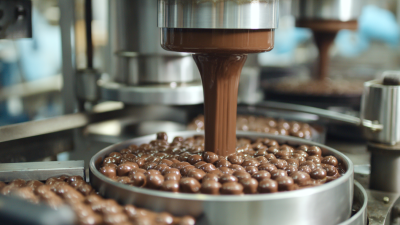
A chocolate depositing machine portions tempered chocolate into moulds, trays, or directly onto a conveyor. Its hopper keeps the chocolate warm and fluid. A pump then moves chocolate through heated pipes to a depositing head. Servo-driven pistons control each dose. The nozzle opens and closes at programmed intervals. This creates uniform bars, shells, discs, or filled pieces.

According to the International Cocoa Organization’s 2023/24 report, global cocoa production was about 4.9 million tonnes.

That volume increases pressure on processors to reduce product loss. Depositing accuracy matters. A 1% dosing error can create costly weight variation across thousands of pieces. In practice, operators adjust temperature, pressure, and deposit speed together. Chocolate that is too cool may clog the nozzle. Chocolate that is too warm may lose its intended temper.

The machine’s working sequence is simple.

Moulds arrive, the head deposits chocolate, and vibration removes trapped air. A cooling tunnel then stabilizes the shape.

PMMI’s 2024 packaging trends research highlights automation, sanitation, and changeover efficiency as major processing priorities. These priorities influence machine selection for global buyers. Hygienic stainless-steel surfaces help cleaning. Tool-free parts can shorten product changeovers.

Still, the first trial is rarely perfect. Viscosity changes with cocoa butter, fillings, room temperature, and mould design. Skilled testing remains essential.

Key Types of Chocolate Depositing Machines for Different Production Needs

Chocolate Depositing Machine for Global Buyers

The right depositor depends on product shape, recipe viscosity, output, and cleaning expectations. A piston depositor suits bars, blocks, and solid pralines. It delivers measured volumes into moulds, even when chocolate contains nuts or crisp inclusions. Servo-controlled models improve accuracy during frequent weight changes. That matters for premium products, where a two-gram error can increase material waste.

One-shot depositing machines are designed for filled chocolates. They place the shell, centre, and closing layer in one moulding cycle. This reduces handling and helps protect soft fillings. Continuous depositing systems fit large factories producing standard shapes at high speed. They require stable tempering and consistent viscosity. Otherwise, edges become uneven, and mould release may suffer. A small mistake becomes expensive.

According to Grand View Research, the global chocolate market was valued at over USD 130 billion in 2023, with continued growth expected through the decade. The report supports investment in scalable equipment, but market growth alone should not dictate machine selection. The 2024 PMMI automation report also highlights labour shortages and stronger demand for automated food-processing lines. Buyers should therefore compare deposit accuracy, changeover time, sanitation access, and operator training. In my experience, suppliers often overstate throughput. Real output can fall when recipes change or cleaning takes longer than planned. Pilot testing remains essential. Test the worst recipe, not the easiest one.

Essential Features to Compare When Choosing a 2026 Machine

Choosing the best chocolate depositing machine in 2026 requires more than checking its advertised output. Compare depositing accuracy, temperature stability, and changeover time under real production conditions. A reliable machine should maintain consistent portion weights, even when chocolate viscosity changes during a long shift. Servo-controlled movement can improve precision, but only when calibration is simple and repeatable. Ask for test results using your actual chocolate recipes.

Hygiene and maintenance deserve equal attention. Look for smooth food-contact surfaces, accessible pumps, removable parts, and clear cleaning procedures. A heated hopper should provide even warmth without creating hot spots that affect flavor or texture. Check whether the machine supports your available voltage, mold sizes, workspace, and production speed. Documentation matters. Request manuals, wiring diagrams, spare-part lists, and operator training details before purchasing. Some suppliers promise high capacity, yet their figures may exclude cleaning and mold changes. That difference can be significant.

Tips: Measure your smallest and largest deposit sizes during trials. Watch the nozzle closely for dripping or stringing. Confirm temperature readings with an independent thermometer. Calculate energy use, maintenance time, and spare-part availability, not only the purchase price. If the interface feels complicated, operators may avoid useful settings. That is worth reconsidering.

How to Evaluate Capacity, Accuracy, Materials, and Automation

2026 Best Chocolate Depositing Machine for Global Buyers

Capacity is more than kilograms per hour. Calculate output from mould size, deposit weight, cooling time, and changeover minutes. A machine rated at 1,200 kilograms daily may deliver less after cleaning and recipe changes. PMMI’s 2024 packaging machinery outlook highlights automation and easier changeovers as major investment priorities. I would request a factory trial using your actual chocolate, moulds, and target temperature. The result is more useful than a catalogue number.

Accuracy depends on the pump, servo control, nozzle design, and temperature stability. Ask for measured weight variation across at least 30 deposits, not a single test piece. For premium products, even a small weight error can affect margins and appearance. Hygienic stainless-steel contact parts, smooth welds, removable nozzles, and documented food-contact compliance should be mandatory. International food equipment guidance also stresses cleanability and material traceability. A polished surface alone proves little. Check internal corners with a flashlight.

Tips: Compare effective output, not maximum speed. Confirm whether the quoted capacity includes cleaning time. Review the control system’s language options, remote diagnostics, recipe storage, and operator access levels. The International Federation of Robotics reported 541,302 industrial robot installations worldwide in 2023, showing how quickly automation is expanding. Still, full automation may not suit every factory. A simpler depositor can be more reliable when labour, service skills, or spare parts are limited. Ask for failure records and maintenance intervals. Manufacturers may hesitate, but that answer matters.

Global Buying Considerations: Compliance, Installation, and After-Sales Support

For global buyers, the best chocolate depositing machine in 2026 is not simply the fastest model. Compliance must fit the destination, product, and factory. Ask for food-contact declarations, electrical documentation, material traceability, and hygienic design details. Local authorities may require different records. Confirm them before payment. During factory evaluations, I look for smooth welds, drainable surfaces, guarded moving parts, and clear cleaning instructions. Small gaps can trap chocolate and increase sanitation risks. A perfect checklist does not exist. Requirements change.

Installation deserves the same attention as machine capacity. Share floor plans, ceiling height, power supply, compressed-air quality, water access, and room temperature with the supplier. A depositor may perform poorly if chocolate viscosity changes by only a few degrees. Request utility drawings, anchor points, commissioning steps, and operator training in writing. Use remote support only when the setup is simple. Complex lines need an experienced technician on site. One overlooked cable can delay production.

After-sales support should be measurable, not promotional. Check spare-parts lead times, troubleshooting channels, warranty boundaries, software access, and service hours across time zones. Ask for a recommended inventory of pumps, seals, sensors, and nozzles. Keep service records with photographs and test results. I would also request a trial run using the buyer’s actual chocolate and moulds. It exposes problems early. Not every supplier handles criticism well. Choose one that documents failures, explains corrective action, and updates procedures after commissioning.

2026 Best Chocolate Depositing Machine for Global Buyers - Global Buying Considerations: Compliance, Installation, and After-Sales Support
Evaluation Dimension Buyer Requirement Practical Data or Typical Range Documents or Evidence to Request Priority
Application and Product Type Confirm that the depositor is suitable for the intended chocolate products and inclusions. Common applications include pralines, molded pieces, bars, shells, filled chocolates, biscuits, and compound-coating products. Product viscosity, temperature, particle size, and mold format should be defined before selection. Product specification sheet, sample trials, supported chocolate temperature range, maximum inclusion size, and approved mold dimensions. High
Depositing Capacity Match output to the required production volume without relying only on the maximum advertised speed. Small and medium production lines commonly use outputs measured in kilograms per hour or deposits per minute. Actual output depends on deposit weight, number of nozzles, mold pitch, chocolate viscosity, and cleaning intervals. Factory acceptance-test results using the buyer’s product, deposit-weight tolerance data, cycle rate, and stated operating conditions. High
Deposit Accuracy Maintain stable portion weights and consistent filling levels. Request a written tolerance target for deposit weight. The acceptable tolerance should be agreed according to product size, recipe, legal metrology requirements, and the buyer’s quality standard. Calibration procedure, test reports at several portion sizes, weight-control method, and sampling frequency. High
Food-Contact Materials Ensure all product-contact parts are suitable for food processing and compatible with chocolate fats. Product-contact components are commonly specified in stainless steel and food-grade polymers or elastomers. Materials must be verified for the destination market and the actual recipe. Material certificates, declarations of conformity, elastomer specifications, welding-finish details, and food-contact compliance statements. High
Hygienic Design Reduce product residue, contamination risk, and cleaning time. Important features include smooth product-contact surfaces, minimal dead zones, accessible piping, drainability, removable nozzles, and separation of product and utility areas. General arrangement drawings, hygienic-design checklist, cleaning instructions, product-contact surface-finish information, and sanitation risk assessment. High
Temperature Control Keep chocolate within the temperature range required for stable flow and tempering performance. Chocolate handling temperatures vary by chocolate type and formulation. Many dark, milk, and white chocolate processes use different working temperatures, so the machine should provide adjustable and monitored heating zones. Temperature-control range, sensor accuracy, heating method, alarm limits, insulation details, and temperature-mapping results. High
Electrical Compatibility Make the equipment compatible with the destination country’s electrical system. Common industrial supplies include 380–415 V, three-phase, 50 Hz in many markets and 440–480 V, three-phase, 60 Hz in parts of North America and other regions. The exact supply must be confirmed before production. Electrical schematic, rated voltage and frequency, full-load current, short-circuit rating, control-panel specification, and plug or cable requirements. High
Regulatory Compliance Identify the regulations that apply in the import country and intended installation environment. Depending on destination, buyers may need machinery safety, electrical safety, electromagnetic compatibility, food-contact, sanitation, pressure-equipment, or workplace-safety documentation. Requirements differ by jurisdiction. Risk assessment, declaration of conformity where applicable, technical file index, electrical test records, user manual, and country-specific compliance statement. High
Safety Functions Protect operators during production, cleaning, adjustment, and maintenance. Typical safeguards include emergency stops, interlocked guards, over-temperature protection, overload protection, anti-scald measures, and controlled restart after power interruption. Safety-circuit description, emergency-stop test procedure, guard-interlock test, hazard analysis, and operator training materials. High
Installation Requirements Confirm that the facility can support the machine before shipment. Check floor loading, machine footprint, access-door dimensions, lifting points, ventilation, drainage, compressed air, water, electrical capacity, and connection locations. Utility requirements vary by configuration. Approved layout drawing, foundation or floor-load data, utility schedule, installation clearance requirements, and lifting instructions. High
Compressed Air Verify air quality and capacity if pneumatic valves or actuators are used. Many food-processing machines use clean, dry compressed air. The required pressure and flow must be taken from the final machine specification rather than assumed from a standard model. Minimum and normal operating pressure, air-consumption rate, filtration requirement, air-quality specification, and connection size. Medium
Controls and Automation Provide repeatable recipes, clear alarms, and integration with the existing production line. Useful functions include recipe storage, access levels, temperature monitoring, deposit-count tracking, alarm history, and communication with upstream or downstream conveyors when required. Control-system architecture, software functions, communication protocol list, backup procedure, language options, and cybersecurity responsibilities. Medium
Changeover and Cleaning Minimize downtime between recipes, products, colors, or mold formats. Compare tool-free access, quick-release nozzles, removable hoppers, recipe recall, clean-out functions, and the number of parts requiring manual disassembly. Changeover-time test, cleaning validation method, parts list, sanitation chemicals compatibility, and recommended cleaning frequency. High
Packaging and Transport Protect the machine from moisture, shock, corrosion, and deformation during international transport. Review packed dimensions, gross weight, center of gravity, lifting points, moisture protection, and container-loading method. Oversized equipment may require special transport planning. Packing list, commercial invoice data, crate dimensions, gross and net weights, lifting diagram, preservation method, and shipping photographs. Medium
Installation and Commissioning Define who is responsible for mechanical installation, electrical connection, testing, and operator training. Support may be provided remotely or on site. A commissioning plan should include alignment, utility checks, empty-run testing, product trials, safety verification, and production acceptance criteria. Installation method statement, commissioning checklist, acceptance-test protocol, training agenda, and responsibility matrix. High
Warranty Coverage Clarify the warranty period, exclusions, response time, and replacement-part responsibilities. Warranty terms should separately identify mechanical parts, electrical components, wear parts, labor, travel, freight, and defects caused by incorrect installation or operation. Signed warranty terms, claims procedure, response-time commitment, excluded conditions, and required maintenance records. High
Spare Parts Availability Secure critical parts for routine maintenance and unexpected failures. Recommended stock commonly includes seals, gaskets, heater components, temperature sensors, fuses, pneumatic parts, nozzles, filters, and other recipe-specific wear parts. Two-year recommended spare-parts list, prices and validity period, part numbers, interchangeability information, and estimated dispatch time. High
Remote Technical Support Ensure support is available across time zones and in a language understood by operators. Confirm support hours, remote diagnostics method, escalation process, video-support capability, and target response time for production-stopping failures. After-sales service procedure, support contacts, escalation chart, remote-access policy, and service-level commitment. High
Serviceability Allow technicians to inspect, clean, calibrate, and replace components safely. Evaluate access to pumps, valves, sensors, heaters, control cabinets, and lubrication points. Maintenance intervals should be based on operating hours, product type, and cleaning frequency. Preventive-maintenance schedule, troubleshooting guide, exploded drawings, lubrication chart, calibration instructions, and lockout procedures. Medium
Total Cost of Ownership Compare the full operating cost rather than the purchase price alone. Include machine price, tooling, freight, duties, installation, utilities, labor, cleaning, spare parts, maintenance, product waste, and expected downtime over the planned service life. Itemized quotation, utility-consumption data, tooling costs, maintenance-cost estimate, spare-parts pricing, and five-year operating-cost assumptions. High
Factory Acceptance Test Verify performance before shipment using agreed product, molds, and operating conditions. Test items may include output, deposit accuracy, temperature stability, alarms, safety devices, changeover, cleaning access, and integration signals. Signed factory acceptance-test protocol, test videos, measured results, nonconformity list, corrective-action record, and final approval certificate. High