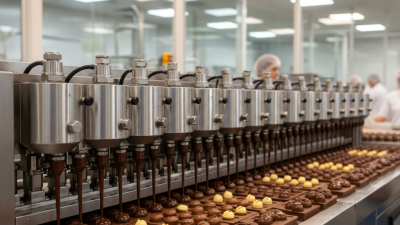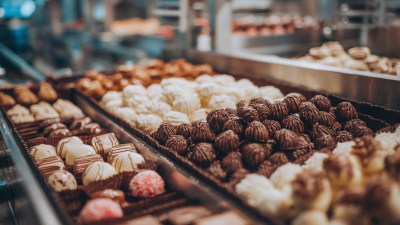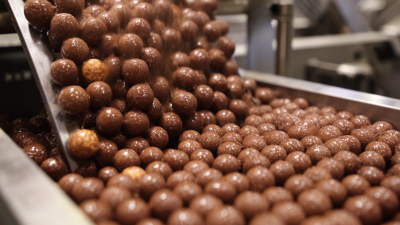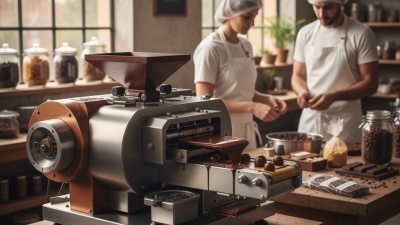
Chocolate enrobing machines have become essential for producers seeking consistent coatings, faster throughput, and cleaner production control. A thin curtain of chocolate must cover each center evenly, while tempering systems protect gloss, snap, and shelf stability. Small temperature changes can still create visible defects.
Industry data supports this investment. Grand View Research’s Chocolate Confectionery Market Size, Share & Trends Analysis Report, 2024–2030, identifies continuing demand for premium, filled, and coated chocolate products. These products require dependable coating accuracy. Meanwhile, PMMI’s packaging machinery research highlights automation, labor efficiency, sanitation, and flexible formats as major equipment priorities. The reports do not rank individual machines, but they clarify what buyers should measure.
This guide examines the top 10 chocolate enrobing machines for buyers. It considers coating width, belt speed, tempering performance, cooling capacity, cleaning access, energy use, and service support. Production scale matters. A compact bakery may value quick changeovers, while an industrial plant may need continuous feeding and remote diagnostics. Do not trust impressive specifications alone. Real performance depends on chocolate viscosity, product shape, ambient temperature, and operator skill. That is where many comparisons become incomplete. Testing with your own recipes remains the safest method. Supplier references, factory trials, spare-parts availability, and documented food-safety practices also deserve close attention. The best machine is not always the fastest. It is the one that delivers stable results without creating avoidable maintenance problems.
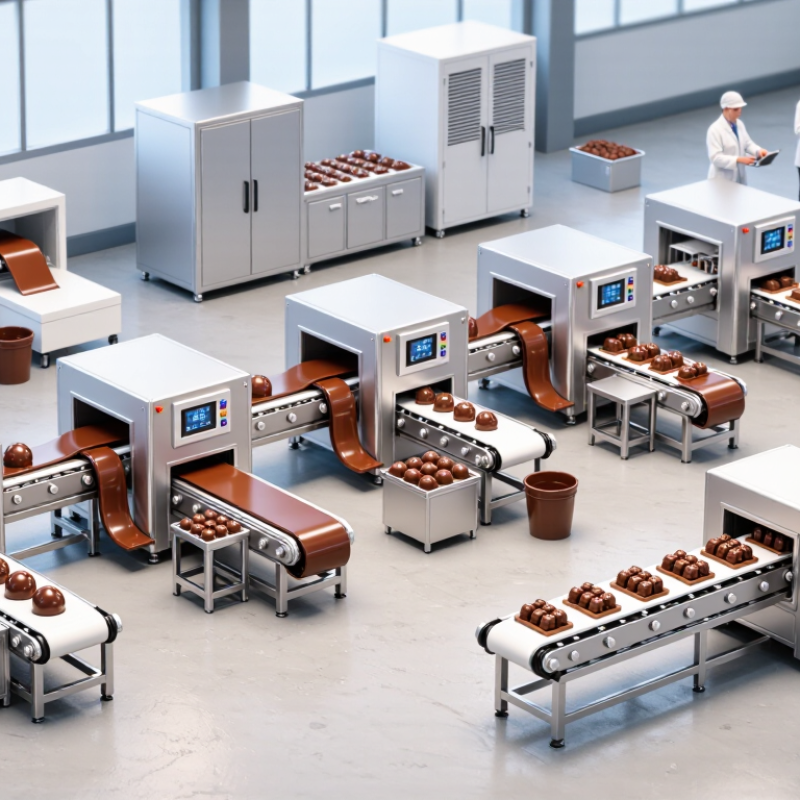
A chocolate enrobing machine coats products with a controlled layer of chocolate. It is commonly used for biscuits, wafers, bars, and filled centers. The product travels on a moving wire mesh. A chocolate curtain covers its top and sides. A bottomer may coat the underside. Excess chocolate returns to the tank through a collection tray.
The machine usually connects with a tempering unit, pump, vibration section, and cooling tunnel. Tempering keeps cocoa butter crystals stable, helping the coating set with shine and a clean snap. Operators adjust belt speed, chocolate temperature, pump flow, and air pressure. Cooling then hardens the shell gradually. In real production, small temperature changes can cause thick edges, dull surfaces, or cracking. No machine is perfect. Product shape, filling temperature, and room humidity also affect results. Buyers should inspect sanitation access, control accuracy, energy use, and replacement-part availability before comparing the top ten models.
Tips: Test your actual products before purchasing. Measure coating weight at several belt speeds. Check whether the mesh is easy to remove and clean. Ask for documented temperature ranges and service training. A machine may look efficient during a demonstration, yet perform differently with sticky fillings or uneven pieces. This is where careful testing matters.
When buyers compare the top 10 chocolate enrobing machines, output speed should not be the only measure. Check belt width, coating thickness, and product spacing. A stable curtain of chocolate should cover the center and edges evenly. During a practical trial, place biscuits, bars, and delicate pieces on the belt. Watch for cracks, bare corners, and chocolate pooling underneath. Those details reveal more than a catalog number.
Temperature control matters greatly. A reliable tempering system should maintain consistent chocolate flow during long production runs. Look for clear controls, quick adjustment, and recorded temperature data. The cooling tunnel should remove heat evenly without causing dull surfaces or bloom. Sanitation also deserves close attention. Tool-free access, smooth welds, removable trays, and easy drainage can reduce cleaning time. Energy use, noise levels, belt changes, and spare-part availability affect daily operating costs. A fast machine is not always the best machine.
Tips: Ask for a sample test with your own chocolate and products. Measure coating weight before and after testing. Check whether one operator can clean the system safely. Request maintenance intervals in writing. Do not ignore small weaknesses. A difficult belt adjustment may become a daily frustration. I once focused too heavily on maximum capacity; that was a poor assumption. Flexible speed control and dependable temperature stability may matter more than impressive peak output. Also inspect the control panel closely. Clear alarms help operators respond before quality changes.
What Are the Top 10 Chocolate Enrobing Machines for Buyers?
The best chocolate enrobing machines depend on product size, coating thickness, and daily output. According to Statista Market Insights, global chocolate confectionery revenue reached roughly US$127 billion in 2023. That scale increases pressure on coating consistency and production efficiency. For buyers, the top ten machine categories include compact belt enrobers, continuous wire-belt enrobers, bottom-coating machines, tempering-enrober systems, integrated cooling-tunnel lines, multi-lane enrobers, nut-piece enrobers, filled-confectionery enrobers, wide-belt industrial units, and modular cleanable systems.
Small details matter. A 400-millimeter belt may suit test production, while a 1,200-millimeter belt supports larger batches. Adjustable blowers help remove excess chocolate from corners. Heated scrapers can reduce buildup near the outlet. PMMI reports that manufacturers continue investing in automation to manage labor pressure and improve repeatability. However, higher automation does not guarantee better products. Poor tempering still creates dull surfaces, streaks, or soft snap.
Buyers should test real products before signing contracts. Bring bars, biscuits, centers, and irregular pieces. Check coating weight, belt stability, chocolate recovery, cleaning time, and temperature control at 30°C. Ask for recorded performance data, not attractive showroom claims. Energy use also deserves attention, especially with long cooling tunnels. Some systems look efficient but require difficult maintenance. That point is often missed. A reliable machine should provide accessible pumps, washable contact parts, clear settings, and trained technical support.
| Rank | Machine Type | Recommended Use | Working Width | Conveyor Speed | Chocolate Capacity | Temperature Control | Cooling Tunnel | Typical Power | Key Buying Considerations |
|---|---|---|---|---|---|---|---|---|---|
| 1 | Industrial Full-Coverage Enrober | Large-scale chocolate bars, biscuits, wafers and centers | 800–1,200 mm | 1–8 m/min | 80–200 kg/h | PID-controlled, typically 28–32°C for dark chocolate | 8–20 m | 25–75 kW | High throughput, automatic tempering compatibility, adjustable bottoming and curtain flow |
| 2 | Continuous Tempering Enrober Line | Factories requiring stable chocolate crystallization and continuous production | 600–1,000 mm | 1–6 m/min | 60–150 kg/h | Multi-zone control with automatic heating and cooling | 6–18 m | 20–60 kW | Integrated tempering, consistent gloss and snap, suitable for long production runs |
| 3 | Modular Belt Enrober | Medium-sized producers with changing product formats | 400–800 mm | 0.5–5 m/min | 30–100 kg/h | Digital control, commonly ±1°C operating stability | 4–12 m | 12–35 kW | Expandable modules, easy belt replacement, flexible product changeover |
| 4 | Compact Bakery Enrobing Machine | Bakeries, pastry kitchens and small confectionery plants | 200–400 mm | 0.5–3 m/min | 15–50 kg/h | Thermostatic or digital control, generally 1–2°C tolerance | 2–6 m | 6–18 kW | Small footprint, straightforward operation, lower installation and maintenance costs |
| 5 | One-Shot Filling and Enrobing Line | Filled chocolates, pralines, cream centers and molded products | 400–800 mm | 1–5 m/min | 40–120 kg/h | Separate controlled circuits for shell and filling chocolate | 6–15 m | 18–50 kW | Depositing and coating in one process, reduced handling, accurate filling control |
| 6 | Bottoming and Partial-Coating Enrober | Products requiring a chocolate base or selected coating areas | 300–700 mm | 0.5–4 m/min | 20–80 kg/h | Digital heating control with adjustable chocolate flow | 3–10 m | 10–30 kW | Lower chocolate consumption, precise coating patterns, useful for premium product designs |
| 7 | Wire-Cut and Enrobing Combination Line | Soft centers, caramel pieces, bars and layered confectionery | 400–600 mm | 1–4 m/min | 25–90 kg/h | Independent control for coating and product handling zones | 4–12 m | 15–40 kW | Combines forming and coating, reduces manual transfer, suitable for varied center shapes |
| 8 | Tabletop Batch Enrobing Machine | Chocolate shops, test kitchens and small-batch production | 150–300 mm | 0.2–1.5 m/min | 5–25 kg/h | Digital thermostat or manual tempering support | Optional external cooling cabinet | 2–8 kW | Low entry cost, compact installation, suitable for product trials and seasonal batches |
| 9 | High-Viscosity Chocolate Enrober | Nut clusters, inclusions, granola products and thick coatings | 300–800 mm | 0.5–4 m/min | 30–100 kg/h | Heated hopper, pump and curtain system with separate zones | 4–12 m | 15–45 kW | Handles thicker chocolate systems, stronger pumping, adjustable curtain thickness |
| 10 | Sanitary Quick-Change Enrober | Producers prioritizing frequent product changes and easy cleaning | 300–700 mm | 0.5–5 m/min | 25–100 kg/h | PLC-based multi-zone control with recipe storage | 4–14 m | 12–40 kW | Tool-free access, removable contact parts, hygienic design and faster changeovers |
Specifications are representative purchasing ranges for comparable chocolate enrobing equipment. Actual output depends on product size, coating thickness, chocolate viscosity, operating temperature, conveyor loading and cooling conditions.
Choosing among the top 10 chocolate enrobing machines depends on production needs, not rankings alone. A small bakery may need 100–300 kilograms per hour, while an industrial line can exceed 1,000 kilograms per hour. Belt width, tempering capacity, cooling length, and changeover time shape the real output. A machine can look powerful on paper, yet struggle with thick coatings or fragile centers.
Grand View Research valued the global chocolate market at about $131.7 billion in 2023. It also projects a 4.7% compound annual growth rate from 2024 to 2030. This growth increases pressure for consistent coating thickness and reduced product waste. Buyers serving retail packs may prioritize servo control and automatic cleaning. Seasonal producers may value quick format changes more than maximum speed. Continuous lines suit stable volumes. Batch-style systems offer flexibility, but they usually demand more operator attention. No machine wins every line.
Tips: Measure actual product temperature, viscosity, and center size before requesting quotations. Ask suppliers for a factory trial using your recipe. Record coating weight, cooling time, belt speed, and rejected pieces. PMMI’s 2024 packaging research highlights ongoing labor shortages and stronger automation demand. Still, automation is not automatically better. Complex controls can slow inexperienced teams. I would leave space for that uncomfortable possibility. A practical top-ten comparison should include training hours, sanitation access, spare-part availability, and energy use—not only kilograms per hour.
The chart compares ten common chocolate enrobing machine configurations by representative throughput. Capacity is shown in kilograms per hour and varies according to product size, coating thickness, belt width, cooling conditions, and operating speed.
Smaller systems are generally suitable for testing, artisan production, and seasonal batches, while wider continuous lines are better suited to large-scale manufacturing and consistent high-volume output.
When buyers compare the top ten chocolate enrobing machines, selection should begin with product evidence, not rankings. Measure coating width, belt speed, chocolate temperature, and daily output against real production records. A machine for biscuits may struggle with soft centers or thick inclusions. Ask for a live trial using your recipe, because viscosity changes after several hours. Check stainless-steel contact surfaces, guarded moving parts, access panels, and documented temperature control. Suppliers should provide electrical data, spare-part availability, training, and service response times. Those details often matter more than a polished brochure.
During operation, stabilize tempering before starting the chocolate curtain. Set the belt slowly, then adjust the bottomer, blower, and cooling tunnel in small steps. Watch the shell at the belt exit. It should look continuous, clean, and free from bald patches. Record chocolate temperature, room temperature, belt speed, and rejected pieces every shift. This log helps operators separate machine faults from recipe or environmental problems. Operators sometimes change three settings together. That makes diagnosis difficult.
Tips: Clean chocolate-contact parts after each production run, following the approved sanitation procedure. Never scrape hardened chocolate with unapproved tools; scratches can trap residue. Inspect pumps, seals, belts, nozzles, and sensors on a fixed schedule. Verify temperature probes with a calibrated reference, not guesswork. Replace worn seals before leaks affect insulation or flooring. Keep maintenance records with dates, readings, and technician names. Real factories are dusty, rushed, and rarely perfect. Record each corrective action beside the relevant reading.