
What Are the Top Types of Hydrated Lime Mixers?

Hydrated lime looks simple in a storage bin: a fine, pale powder. In a mixer, however, it can behave very differently. Moisture, particle size, feed rate, and the required blend all affect performance. Choosing the right Hydrated Lime Mixer is therefore a process decision, not just a equipment purchase.

This overview compares common mixer types, including ribbon, paddle, plow, and continuous systems. Each design handles material in a different way. A ribbon mixer may suit controlled batch blending, while a paddle or plow mixer can provide more intensive movement. Continuous mixers can support steady production, but they require careful control of feed and residence time. Small details matter. A damp patch on a mixer wall, for example, can signal a process problem before the final product does.

“The best mixer is the one that delivers a consistent blend under the plant’s actual operating conditions.” This is a proposed quotation, not a verified statement. Before publication, attribute it only to a named Hydrated Lime Mixer specialist who has reviewed and approved the wording. That check matters. Mixer selection should also consider cleanout access, wear surfaces, dust control, and maintenance needs. No single design is ideal for every plant. Comparing these practical trade-offs can help buyers ask sharper questions and avoid choosing equipment based on capacity alone.
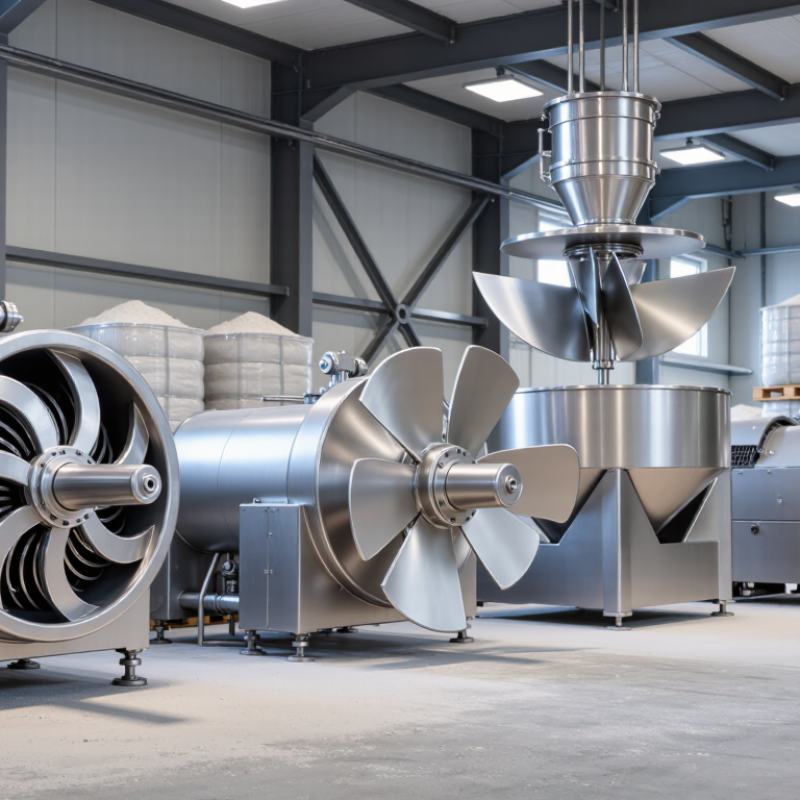
What Are the Top Types of Hydrated Lime Mixers?

How Hydrated Lime Mixers Work

A hydrated lime mixer controls contact between quicklime, water, and moving blades. In a continuous paddle hydrator, metered quicklime and water enter one end. Paddles break up lumps and move the material through the chamber as hydration releases heat. The reaction is CaO + H₂O → Ca(OH)₂: about 56.1 kilograms of quicklime needs 18.0 kilograms of water chemically. Actual water feed varies with the required product and operating conditions. Too little can leave gritty, unreacted particles. Too much can make a paste difficult to handle. Small details matter.

Batch mixers work differently. Operators charge a vessel, agitate the contents, allow the reaction to proceed, then discharge the hydrated material. They can suit changing batch sizes; continuous systems fit steadier production. The USGS 2024 Mineral Commodity Summaries estimated U.S. lime production at 17 million metric tons in 2023, underscoring the scale of the industry, not the performance of any single mixer. In practice, operators monitor feed rates, temperature, motor load, and discharge texture. A smooth-looking sample is not proof of complete hydration; grit checks and consistent sampling help catch problems. Honestly, feed quality can vary more than a neat process diagram suggests.

What Are the Top Types of Hydrated Lime Mixers? - How Hydrated Lime Mixers Work

Mixer type How it works Typical use Key strengths Important considerations
Agitated batch tank An impeller circulates water in a tank while hydrated lime powder is added gradually. The flow helps wet and disperse particles into a slurry. Preparing batches of lime slurry for water treatment, pH adjustment, or other process dosing. Straightforward operation; accommodates different batch sizes and mixing times. Powder should be added in a controlled manner to limit dust and prevent clumps. Tank and impeller design should suit the slurry concentration and settling behavior.
High-speed disperser A rapidly rotating dispersing blade creates strong local flow that draws powder into the liquid and breaks up soft agglomerates. Powder wetting and dispersion where quick incorporation or a more uniform batch is needed. Can improve powder incorporation and reduce persistent lumps when operated correctly. Can introduce air or create dust during charging. It may require additional low-speed agitation to keep solids suspended after dispersion.
Inline static mixer Fixed elements inside a pipe split and recombine flowing streams. Mixing energy comes from the pressure-driven flow; the mixer has no moving parts. Blending a prepared lime slurry with a process stream, or mixing compatible liquid streams continuously. Compact design with no internal drive shaft or rotating components. Requires adequate flow and pressure. It is generally not a substitute for a powder-wetting vessel, and slurry lines need suitable cleanout and blockage controls.
Rotor-stator inline mixer A powered rotor turns within a stationary stator, generating intense shear and circulation as liquid and solids pass through the mixing head. Rapid wetting or deagglomeration in continuous or recirculating slurry-preparation systems. Provides strong local mixing and can help disperse agglomerates. Uses more mechanical energy than a static mixer and has moving parts subject to wear. Equipment selection should account for abrasive solids and maintenance access.
Continuous paddle or trough mixer Rotating paddles convey and blend material along a trough. Depending on the system, water can be introduced during mixing to form a wet mixture or slurry. Steady-throughput powder conditioning or continuous mixing applications designed for solids handling. Supports continuous feed and can combine conveying with mixing. The feed rate, water addition, residence time, and discharge design must be coordinated. It is not automatically suitable for preparing a pumpable slurry.

Note: Hydrated lime is calcium hydroxide, Ca(OH)2. A hydrated-lime mixer generally disperses or blends the already hydrated powder; a lime slaker is used to react quicklime, CaO, with water.

Paddle Mixers for Uniform Lime Blending

What Are the Top Types of Hydrated Lime Mixers?
Paddle Mixers for Uniform Lime Blending

Paddle mixers suit hydrated lime blending when steady, repeatable dispersion matters. Their rotating paddles lift and fold powder through the mixing chamber, helping reduce unmixed pockets. That matters when lime feeds a dosing system or slurry preparation line. A dry corner can cause trouble.

The U.S. Geological Survey’s 2025 Mineral Commodity Summaries estimates U.S. lime production at about 18 million metric tons in 2024. This figure covers lime production overall, not hydrated lime alone, but it shows the scale of the industry. At that scale, consistent feed and dependable mixing deserve close attention.

For better results, operators should control feed rate, batch fill, and mixing time. Check paddle wear, too; worn edges can leave uneven circulation. ASTM C110 describes physical test methods for quicklime, hydrated lime, and limestone, but it does not certify mixer uniformity. Sampling the finished blend at several points can reveal variation. A paddle mixer is not magic. Moisture, lumps, and poor feeding still matter, and real plant conditions may expose flaws that a small trial misses.

Ribbon Mixers for Dry Hydrated Lime

Ribbon Mixers for Dry Hydrated Lime

A ribbon mixer is a practical option for blending dry hydrated lime with other powdered ingredients. Inside its horizontal trough, inner and outer ribbons move material in opposing directions. This creates both radial and lengthwise movement, helping distribute components through the batch. Keep the mixer correctly filled: too little material may reduce mixing action, while overfilling can leave uneven pockets.

Hydrated lime is fine and dusty, so enclosure design and dust collection deserve attention. Keep the charging and discharge points controlled, and check seals, covers, and ventilation during routine inspections. Small leaks matter. Moisture can also encourage caking, which may affect flow and cleanout. A poorly flowing batch may need process adjustments rather than simply a longer mixing cycle. Use trials.

Before selecting equipment, consider batch size, required blend uniformity, particle characteristics, and how the mixer will be emptied and cleaned. A ribbon mixer is not a magic fix; some blends may need a different mixing approach. Test representative materials and inspect samples from several points in the discharged batch. Those checks can reveal uneven distribution that a single sample might miss.

Pugmill Mixers for Moisture-Rich Lime Mixtures

Pugmill mixers suit hydrated lime blends when water must be distributed through a continuous stream of solids. Counter-rotating shafts and angled paddles fold material repeatedly, helping break soft clumps and limit wet and dry pockets. A damp lump can hide a dry core. Operators should check moisture at several points, not only at the discharge chute. Feed rate, water flow, paddle wear, and residence time all affect consistency.

The U.S. Geological Survey’s Mineral Commodity Summaries 2025 estimates U.S. lime production at about 18 million metric tons in 2024. That figure describes the scale of lime handling, not a recommended mixer size. Actual pugmill capacity depends on bulk density, target moisture, and the material’s tendency to cake. For hydrated lime, enclosed feed points and effective dust control also matter. A visible dust plume may signal poor containment, but it does not prove the blend is dry.

For moisture-rich mixtures, operators can adjust water in small increments and inspect the discharge for shine, streaks, and persistent lumps. Measure torque and motor load during commissioning; rising load may indicate buildup or over-wetting. Not automatically. A pugmill cannot correct uneven feeding by itself. One practical limitation is that sticky material may coat paddles and reduce mixing action, so access for inspection and cleaning should be considered during equipment selection.

Top Types of Hydrated Lime Mixers

Indicative suitability for moisture-rich lime mixtures

Pugmill mixers are often a strong choice for moisture-rich blends because their intensive kneading action supports wet mixing and material conditioning. Ratings are qualitative comparisons based on typical mixer design, not standardized performance-test results; actual suitability depends on the material and process.

High-Shear Mixers for Rapid Lime Dispersion

High-shear mixers suit hydrated lime preparation when powder must disperse quickly in water. A rotor-stator head creates intense local turbulence, drawing powder into the liquid and breaking apart many soft agglomerates. Operators can see the difference: fewer floating clumps, a more even slurry, and less time spent scraping the tank wall. It matters. The U.S. Geological Survey’s 2024 Mineral Commodity Summaries estimated U.S. lime production at 17 million metric tons in 2023. That figure covers lime broadly, not hydrated lime alone, but it shows why dependable, repeatable processing matters at industrial scale.

For better dispersion, feed hydrated lime steadily into a moving liquid zone rather than dumping a full bag into a quiet tank. Control the feed rate, batch temperature, and mixer speed; excessive shear can add heat and may not fix poor powder wetting. A recirculation loop can help even out concentration, especially in larger vessels. Check samples from different tank locations for lumps and consistency.

High shear is useful, not magic. Results still depend on powder quality, water chemistry, and equipment setup, and those variables are easy to underestimate. A small trial batch can reveal problems before they reach full production.