
Why Choose a 21V 40mm Electric Pruning Shear?
A 21V 40mm Electric Pruning Shear can change how growers handle demanding pruning work. It combines cordless movement with enough cutting capacity for many branches. The 40mm opening is especially useful for orchards, vineyards, gardens, and landscape maintenance. Instead of forcing a manual blade through thick wood, the motor delivers a controlled cutting action. That can reduce hand strain during long working sessions.
Dr. Michael A. Dirr, a respected horticulturist and woody-plant specialist, has described pruning as “both an art and a science.” His point remains practical. A powerful shear cannot replace sound judgment. Users still need to identify live wood, weak angles, and unhealthy growth before cutting. Precision matters.
The 21V battery platform offers a useful balance between portability and working power. It avoids fuel fumes and removes the restriction of a power cord. A balanced handle can improve control near crowded branches. A sharp bypass blade can leave cleaner cuts, which may support better plant recovery. However, performance depends on battery condition, blade maintenance, branch hardness, and operator technique.
That part is easy to overlook.
A 40mm rating does not mean every branch should be cut at maximum capacity. Repeated cuts near the limit can increase wear and reduce battery runtime. Experienced users check the branch diameter first. They also clean and sharpen the blade regularly. Choosing this tool makes sense when productivity, mobility, and reduced physical effort matter. It may be excessive for occasional light pruning. That distinction deserves honest consideration before purchase.
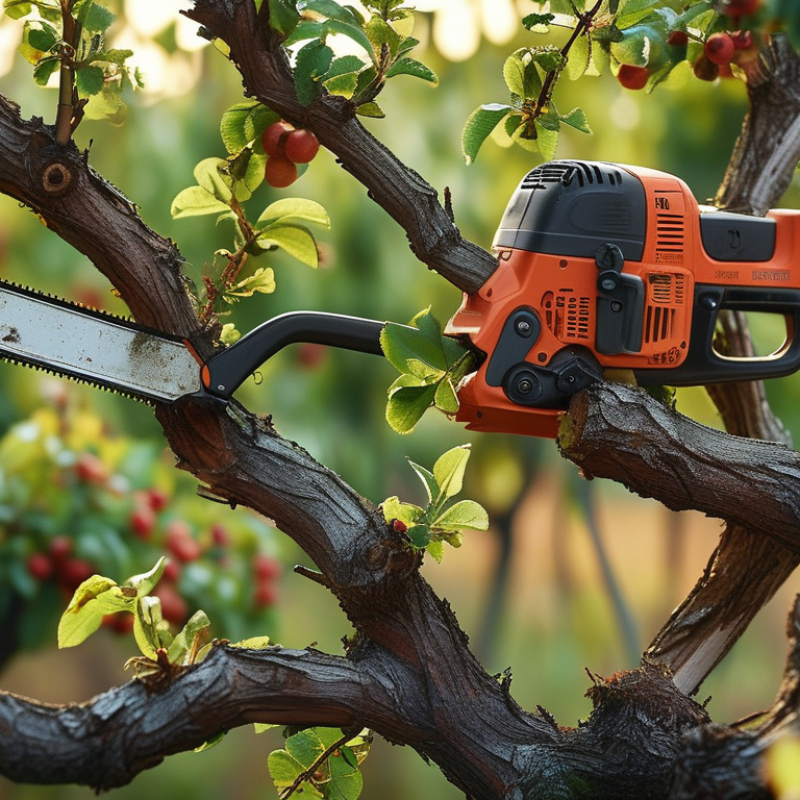
A 21V 40mm electric pruning shear is a battery-powered cutting tool designed for repetitive branch work. “21V” usually describes the battery system’s nominal or maximum voltage, depending on the manufacturer. It does not automatically indicate stronger cutting performance. Motor efficiency, blade geometry, battery current, and branch hardness matter too. The “40mm” figure normally means the largest recommended cut under favorable conditions. Fresh, straight wood may cut cleanly. Dry, twisted, or fibrous branches can exceed that practical limit. That distinction is easy to miss.
In orchard work, the tool reduces repeated squeezing and may help workers maintain a steadier cutting rhythm. FAO’s 2022 State of Food and Agriculture report highlights automation’s potential to improve agricultural productivity and address labor constraints, while warning that access and suitability remain uneven. This supports careful tool selection, not blind automation. A 21V model is most useful where daily pruning is substantial, portability matters, and charging access is available. Operators should check blade opening, trigger response, battery endurance, and serviceable parts. Field conditions are rarely perfect. A claimed 40mm capacity may feel optimistic after several hours of use. Clean cuts still depend on sharp blades, correct branch positioning, and patience. The tool assists judgment; it does not replace it.
The 21V rating indicates the tool’s battery voltage, while the 40mm rating identifies its stated maximum cutting diameter. Together, these specifications describe a cordless shear designed for efficient pruning of branches within its rated capacity.
A 21V battery platform supports cordless operation, and a 40mm maximum cutting diameter helps reduce the need for manual loppers when handling suitably sized branches. Actual performance depends on wood hardness, branch condition, blade sharpness, and battery charge.
A 21V electric pruning shear combines portable power with a blade opening designed for branches up to 40mm. The battery supplies enough voltage for repeated cuts without a fuel engine or trailing cord. In practical use, this means less arm strain during long trimming sessions. It also keeps movement simple around dense shrubs and uneven ground. However, voltage alone does not determine cutting strength. Motor torque, gear quality, battery capacity, and blade sharpness matter just as much. A 40mm rating is a useful guide, not a promise for every branch.
The 40mm cutting capacity works best on fresh, straight, accessible wood. Hard, dry, knotted, or angled branches can demand more force and reduce battery runtime. I have found that positioning the blade squarely before squeezing the trigger gives cleaner cuts. Small adjustments matter. For branches near the maximum diameter, cut slowly and avoid twisting the tool. Twisting can stress the drive system and leave a crushed edge. The result depends on species and condition, so testing on a spare branch is sensible.
A 21V battery also changes the working rhythm. A larger-capacity pack supports more cuts, while a spare battery reduces interruptions. Keep contacts dry and inspect the blade before use. Follow the charger instructions carefully. Protective gloves and eye protection remain sensible, even with an automatic cutting tool. I would not treat 40mm as an everyday target. Smaller branches usually feel faster and cleaner. Check the real specifications before purchase, because voltage and capacity can vary between models.
A 21V 40mm electric pruning shear can make varied pruning tasks feel more controlled. In hands-on garden work, I notice the difference during repeated cuts. The motor reduces squeezing effort during long sessions. A 40mm opening suits fresh branches, grape canes, and medium-sized woody stems. It is not magic. Hard, dry, or twisted wood may still require a hand saw. Cutting capacity also depends on blade sharpness, branch position, and battery condition.
For shaping young fruit trees, the shear allows quick removal of crossing shoots and crowded twigs. Its narrow cutting head can reach between stems without scraping nearby bark. On hedges, repeated trimming becomes less tiring and helps maintain a steadier wrist. That matters because uneven pressure can leave ragged cuts. Clean cuts usually support better healing, but the blade must stay sharp and clean. I sometimes rush this step, and that is a mistake worth correcting.
For thicker branches near the 40mm limit, controlled technique matters more than speed. Support the branch, keep fingers clear, and cut outside the branch collar. A 21V system often balances cutting power with manageable weight, yet runtime varies with workload and temperature. Check the battery before entering a large orchard row. Short breaks help prevent fatigue-related errors. Protective glasses and gloves remain sensible, even when the shear feels easy to operate.
Why Choose a 21V 40mm Electric Pruning Shear?
Safety, Handling, and Maintenance Requirements
A 21V 40mm electric pruning shear can reduce hand strain during repeated cutting. Its capacity suits many branches found in gardens, orchards, and small landscaping jobs. However, cutting power demands careful control. Before use, inspect the blade, trigger, guard, and battery housing. Wear eye protection and close-fitting gloves. Keep loose sleeves away from the cutting area. Never cut wet branches when your grip feels unstable.
Good handling starts with both feet firmly placed. Hold the shear with one hand and keep the other hand well away. Watch the branch, not only the blade. Make clean cuts without twisting the tool. Short work sessions help prevent wrist fatigue. I have learned that rushing creates more mistakes than difficult branches. A brief pause can prevent an awkward cut.
Maintenance affects safety and cutting quality. Remove sap and wood dust after each session with a dry cloth. Apply the recommended lubricant to the moving joint, but avoid soaking the electrical parts. Check blade sharpness regularly. A dull blade needs extra pressure and may crush young stems. Inspect fasteners and replace damaged components through qualified service. Charge the battery in a dry, ventilated place. Store the shear with the blade closed and the battery separated. I still occasionally overlook small sap buildup, so a simple cleaning routine remains necessary.
Why Choose a 21V 40mm Electric Pruning Shear?
Choosing the right 21V 40mm electric pruning shear depends on your trees, workload, and working habits. The 40mm rating usually describes the maximum cutting capacity, not every branch. Fresh, soft wood may cut easily, while dry hardwood can slow the blade and drain the battery. Check the branch sizes in your garden before choosing this specification.
I once selected a powerful shear for a small backyard. It worked, but the tool felt heavy after an hour. That choice was not entirely right. For frequent pruning, compare the tool’s weight, grip shape, trigger response, and balance. A compact model may suit delicate vines and narrow branches. A stronger 40mm model fits mature fruit trees, thick stems, and longer pruning sessions. Also check battery capacity, charging time, blade material, spare battery availability, and local service support. Runtime claims can vary in cold weather and dense wood.
Tips: Measure typical branches, not only the thickest one. Test the grip with gloves. Confirm whether the 40mm capacity applies to fresh wood. Keep a spare charged battery for larger gardens. Inspect blade movement before each session, and clean plant residue after use. I would also read the maintenance instructions carefully; ignoring them can reduce cutting accuracy. Choose safety features you will actually use. A slower, controlled cut is often better than maximum speed.
| Selection Dimension | Compact 21V Model | Standard 21V Model | High-Capacity 21V Model | Why It Matters |
|---|---|---|---|---|
| Maximum Cutting Capacity | 25–30 mm for fresh, soft-to-medium branches | 30–35 mm for routine garden and orchard pruning | Up to 40 mm under suitable cutting conditions | Choose a capacity above the typical branch diameter to reduce repeated cuts and motor strain. Actual capacity varies with wood species, moisture, branch shape, and blade condition. |
| Recommended Users | Home gardeners and occasional users | Landscape workers, gardeners, and small orchards | Orchard, vineyard, forestry-maintenance, and professional users | The best model should match daily workload, branch size, and expected operating frequency. |
| Typical Tool Weight | Approximately 0.8–1.0 kg without battery | Approximately 0.9–1.2 kg without battery | Approximately 1.0–1.4 kg without battery | A lighter tool improves maneuverability and reduces hand fatigue, while heavier models may provide stronger cutting mechanisms. |
| Battery Configuration | One rechargeable lithium-ion battery | One or two rechargeable lithium-ion batteries | Two batteries or a higher-capacity battery system | A replaceable battery helps extend working time and allows one battery to charge while another is in use. |
| Battery Voltage Description | 21V class; confirm whether the specification is nominal or maximum voltage | 21V class; commonly paired with a rechargeable lithium-ion pack | 21V class; higher capacity is more important than voltage alone for runtime | “21V” may refer to a maximum battery voltage rather than the nominal operating voltage. Check the battery label and charger specifications before purchase. |
| Expected Cutting Speed | Suitable for light pruning and lower branch volume | Balanced speed for regular maintenance work | Designed for frequent cutting and larger branch diameters | Cutting speed depends on branch hardness, blade sharpness, battery charge, and the control system—not voltage alone. |
| Opening Adjustment | Usually two-position or fixed opening | Two- or three-position opening adjustment | Several opening settings, often with programmable or trigger-based control | A smaller opening can improve efficiency on thin branches and reduce unnecessary trigger movement. |
| Blade Material and Maintenance | Hardened steel blade; regular cleaning and sharpening required | Replaceable hardened steel blade; periodic lubrication recommended | Replaceable high-strength blade; frequent inspection recommended for heavy use | A sharp, correctly aligned blade improves cut quality, reduces crushing, and lowers energy consumption. |
| Safety Features to Look For | Trigger lock, safety switch, and automatic shutoff | Trigger lock, safety switch, blade-stop protection, and overload control | All standard safety features plus anti-cut protection and fault indicators | Safety controls help prevent accidental activation and protect the motor when the blade is overloaded or obstructed. |
| Runtime Considerations | Best for short sessions and light pruning | Suitable for routine garden or landscape sessions | Better suited to extended work with spare or dual batteries | Runtime changes with branch diameter, cutting frequency, temperature, battery age, and battery capacity measured in ampere-hours. |
| Charging Requirements | Use the supplied charger with the correct voltage and charging profile | Use a charger matched to the battery chemistry and rated voltage | Consider a faster charger only when it is approved for the battery pack | Using an incompatible charger can reduce battery life and create a safety risk. |
| Best Application | Flowers, shrubs, young fruit trees, and light seasonal trimming | Fruit trees, vines, ornamental trees, and general landscape maintenance | Mature fruit trees, thick vines, hard branches, and high-volume pruning | Match the tool to the branch diameter and working environment rather than selecting solely by voltage. |
| Recommended Choice | Choose when low weight and easy handling are the priorities | Choose for the best balance of capacity, comfort, runtime, and price | Choose when branches approach 40 mm and the workload is frequent or professional | For a general-purpose purchase, a standard 21V model is often the most balanced option; select a true 40 mm model only when that capacity is regularly needed. |
Note: A stated 40 mm cutting capacity is normally a maximum rated value, not a guarantee for every type of wood. Always follow the tool manual, wear eye and hand protection, remove the battery before blade maintenance, and verify the battery, charger, blade-opening range, and replacement-parts availability before purchase.