Why Choose Oatmeal Chocolate Moulding Machines?
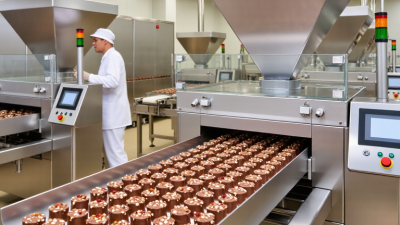
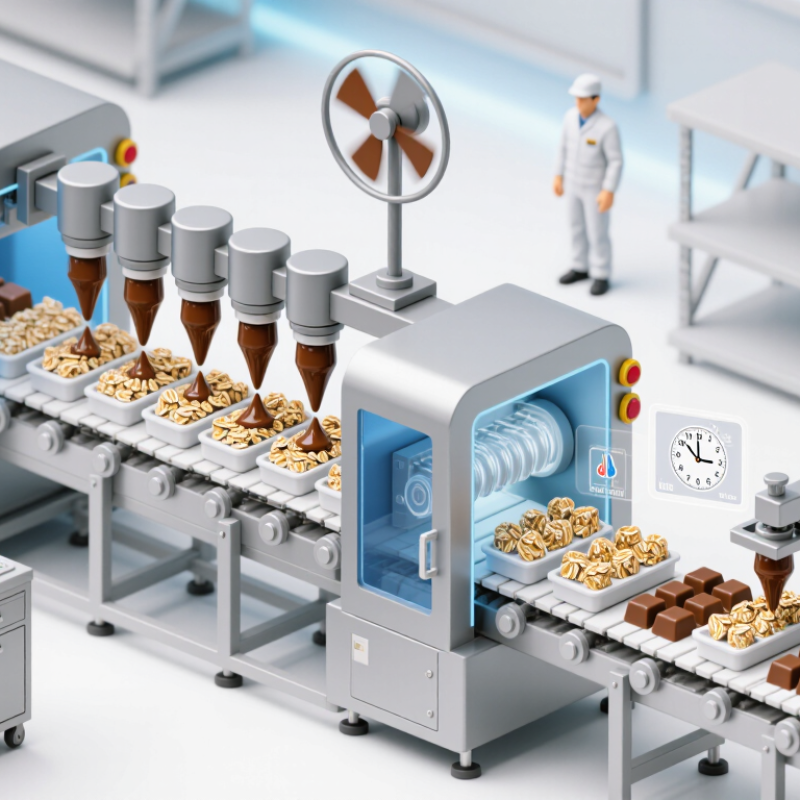
Why Choose oatmeal chocolate moulding machines? For many confectionery producers, the answer begins with consistency. These machines deposit measured chocolate portions into carefully prepared moulds. They can support bars, bites, clusters, and filled oat-based products. A stable forming process helps maintain weight, shape, and appearance across every batch.
Modern oatmeal chocolate moulding machines often combine mould preparation, depositing, vibration, cooling, and release functions. This reduces repeated manual handling. It also helps production teams monitor key details, such as chocolate temperature, mould alignment, cooling time, and product thickness. Small changes matter. A few degrees can affect gloss, texture, and demoulding performance. Experienced operators still need to adjust settings for different recipes. Equipment cannot replace practical judgment.
Food safety should remain central to the purchasing decision. Buyers should examine cleanable surfaces, accessible contact parts, documented maintenance procedures, and suitable materials. Reliable suppliers should provide technical specifications, training, spare-part support, and clear performance information. Ask for realistic test results, not only impressive sample photos. Production conditions differ.
The best choice depends on more than output speed. Consider recipe viscosity, inclusions, mould dimensions, available floor space, energy use, and future capacity. A machine may perform well in a demonstration yet require adjustments on a busy factory line. That possibility deserves honest attention. Careful trials and qualified engineering advice can reduce avoidable risks. In the right setting, oatmeal chocolate moulding machines offer a practical route toward repeatable quality, efficient labor use, and scalable confectionery production.
What Are Oatmeal Chocolate Moulding Machines and What Do They Produce?
Why Choose Oatmeal Chocolate Moulding Machines?
Oatmeal chocolate moulding machines shape tempered chocolate into bars, bites, shells, and filled pieces. They combine depositing, vibration, cooling, and demoulding in one controlled line. For oatmeal products, the process must manage oat flakes, powders, or crisp inclusions carefully. Particle size affects flow, surface finish, and bite. Moisture matters too. A small moisture increase can reduce chocolate crispness and shorten shelf life.
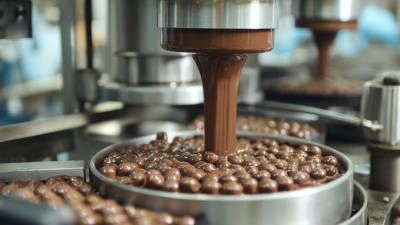
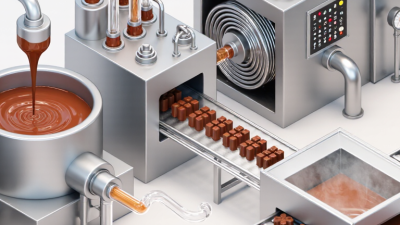
The machine first heats and tempers chocolate to stabilize its cocoa butter crystals. It then deposits a measured dose into each mould. Vibration helps remove air pockets around oat particles. A cooling tunnel sets the shape before automatic demoulding. Operators can adjust deposit weight, cooling temperature, belt speed, and mould design. These settings support chocolate bars, snack clusters, mini squares, and filled oatmeal chocolate pieces.
The commercial value is significant. Grand View Research reported that the global chocolate market reached approximately USD 119.39 billion in 2023. Its report also projected a 7.6% compound annual growth rate from 2024 to 2030. Such growth increases pressure for repeatable production and lower material waste. In my experience, automation improves consistency, but it is not magic. Oats can settle unevenly, and inclusions may block narrow dosing parts. Regular cleaning and process checks remain essential. Some manufacturers may still overestimate machine speed. Product quality depends on formulation, temperature control, and trained operators.
Why Choose Oatmeal Chocolate Moulding Machines?
Oatmeal chocolate moulding machines deposit tempered chocolate and oat-based inclusions into consistent shapes such as bars, bites, tablets, and snack pieces. The chart shows common working-temperature setpoints used for different chocolate types during moulding.
Dark, milk, and white chocolate require different working temperatures to maintain stable cocoa-butter crystallization, clean release from moulds, and a smooth finished surface. Actual settings vary with recipe, oat inclusion level, cooling conditions, and equipment design.
How Oat Particles Influence Viscosity, Flow, and Mould-Filling Accuracy
Oatmeal chocolate moulding machines must handle more than melted chocolate. Oat particles change viscosity, flow resistance, and filling behavior. Their size, hydration level, and beta-glucan content all matter. Fine oat flour can thicken the mass quickly, while larger flakes may interrupt smooth movement through narrow channels.
Temperature control becomes critical. A mixture that flows well at 42°C may become noticeably slower after slight cooling. Excessive heat, however, can affect chocolate texture and aroma. Controlled shear helps distribute particles without breaking them into an unpredictable paste. Operators should monitor pressure, nozzle speed, and deposit weight during each production run. Small changes can create visible differences.
Mould-filling accuracy depends on particle distribution. Settling may cause the first cavities to contain less oat material than later cavities. Gentle agitation can reduce this risk, but too much movement may introduce air. Air pockets often appear as rough surfaces or incomplete corners. Particle size should be checked before mixing, not only after a filling problem occurs. A practical trial might compare two oat grades at the same temperature and flow rate. The results may challenge an easy assumption: thinner chocolate does not always produce better filling. In some cases, a slightly thicker mixture holds particles more evenly. That balance is difficult. Calibration must be repeated when moisture, recipe ratios, or mould geometry changes.
How Automated Moulding Supports Consistent Weight and Production Throughput
Why Choose Oatmeal Chocolate Moulding Machines?
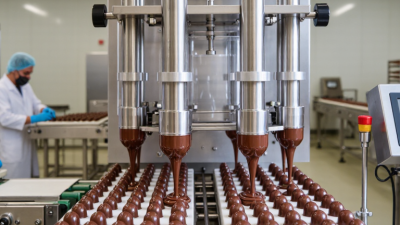
Oatmeal chocolate moulding machines help control portion weight and maintain steady production throughput. This matters when each piece must look and feel consistent. Automated depositing measures the chocolate-oatmeal mixture more precisely than manual filling. Sensors can monitor hopper levels, mould speed, and product flow. Operators can then adjust settings before small variations become expensive waste.
In a working line, consistent weight supports predictable packaging counts and simpler quality checks. A mould may hold dozens of portions, while the conveyor moves continuously beneath cooling equipment. Stable timing reduces gaps between batches and helps production teams plan labour more accurately. However, automation is not magic. Mixture temperature, oat size, and viscosity still affect results. A machine may perform well today and drift tomorrow if cleaning or calibration is ignored. That part is easy to underestimate.
Tips: Check the first moulded pieces from every batch. Record their weights and compare them with the target range. Keep the mixture temperature consistent. Clean sensors and mould surfaces on schedule. Train operators to notice unusual flow, noise, or uneven release. Small warning signs matter. A practical review after each shift can reveal problems before throughput falls. Some facilities may also test different mould speeds, because the fastest setting is not always the most reliable one.
How HACCP, ISO 22000, and 304 Stainless Steel Improve Food Safety
Why Choose Oatmeal Chocolate Moulding Machines?
How HACCP, ISO 22000, and 304 Stainless Steel Improve Food Safety
Oatmeal chocolate moulding machines can support safer, more consistent food production. Food safety begins with the process, not only the finished product. A HACCP plan maps hazards from ingredient loading to mould release. Operators can identify risks such as allergens, metal fragments, moisture, and poor cleaning. Each control point needs clear limits and practical records. Yet paperwork alone cannot protect food.
ISO 22000 connects hazard analysis with daily management procedures. It encourages traceability, staff training, supplier checks, and corrective actions. During production, workers should record temperatures, cleaning times, and unusual machine behavior. These details help teams investigate problems before they spread. No system is flawless. A rushed inspection can still miss residue beneath a guard.
304 stainless steel adds a dependable hygienic surface to the machine. It resists corrosion and tolerates regular contact with cleaning solutions. Smooth welds and accessible product paths reduce places where oatmeal particles may collect. After production, sanitation teams can inspect corners, seals, conveyors, and mould plates more effectively. Visual checks remain important, even with polished surfaces. People remain essential.
A reliable machine should also support safe access, clear maintenance routines, and documented verification. Experienced operators often notice small changes first, such as thicker chocolate flow or unexpected crumbs. Their observations deserve formal review, not dismissal. Food safety improves when equipment design, certified systems, and human judgment work together.